Developer Tool / Productivity

Claude Usage Tray

A Windows system-tray app that shows Claude Code session and weekly rate-limit usage at a glance, with hover and click views for more detail.

Clear28/30
Useful26/30
Specific17/20
Complete16/20
Claude Usage Tray screenshot

Why it was accepted

The page clearly describes a real AI-adjacent utility with a specific job: tracking Claude Code rate-limit usage on Windows. It includes enough evidence for a public listing, including what it does, who it is for, install steps, how it works, and privacy notes. The project is lightweight, cross-IDE, and directly useful to Claude Code users.
Weakness

The snapshot does not show screenshots rendered inline, release/version history, or any indication of maintenance activity beyond a few commits. It also does not show whether the tool supports non-Windows platforms or how it behaves in edge cases beyond token expiry and 429 handling.

Review status

24 days ago #128 ↓ -4

Last evaluated 24 days ago. Current rank #128. Down 4 spots in the rankings.

Score history

87

Related listings

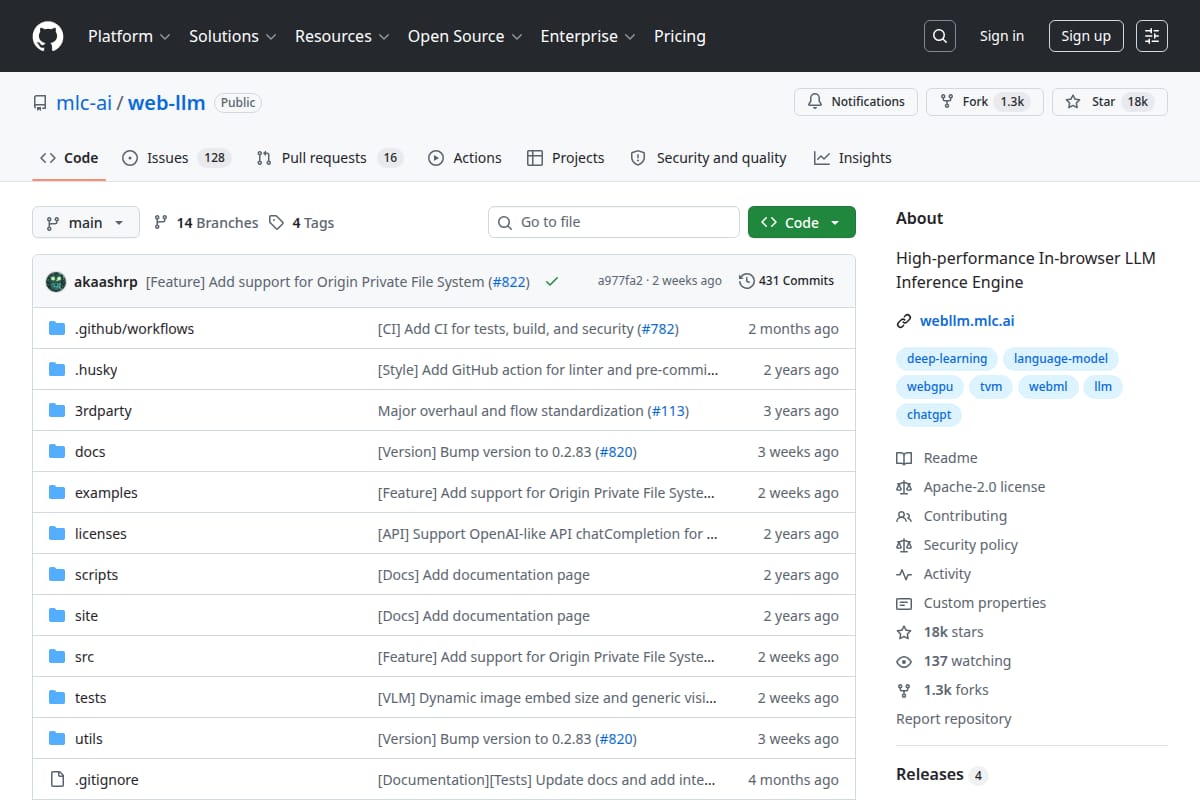
WebLLM screenshot
#4 WebLLM
92

Developer Tool / AI SDK / In-browser LLM inference

WebLLM is a high-performance in-browser LLM inference engine that runs locally in the browser with WebGPU acceleration. It exposes an OpenAI-compatible API, supports streaming and JSON mode, and includes examples for building chat apps and browser extensions.

Flightdeck screenshot
90

Developer Tool / AI Observability

Self-hosted observability and control plane for production and coding AI agents, with live timelines, fleet-wide feeds, token budgets, MCP allow/block rules, and support for Claude Code plus a Python sensor.

Redact screenshot
#42 Redact
89

Developer Tool / Browser Extension

Browser extension that scans pastes for credentials and PII before they reach LLM chat sites, with local on-device inference and no network calls.

OSymandias screenshot
88

Developer Tool / AI Agent Runtime / Orchestration

Open-source runtime for multi-agent AI systems with job scheduling, DAG orchestration, shared memory, tool execution, and real-time observability.