Developer Tools / AI Memory / Agent Infrastructure

FERNme

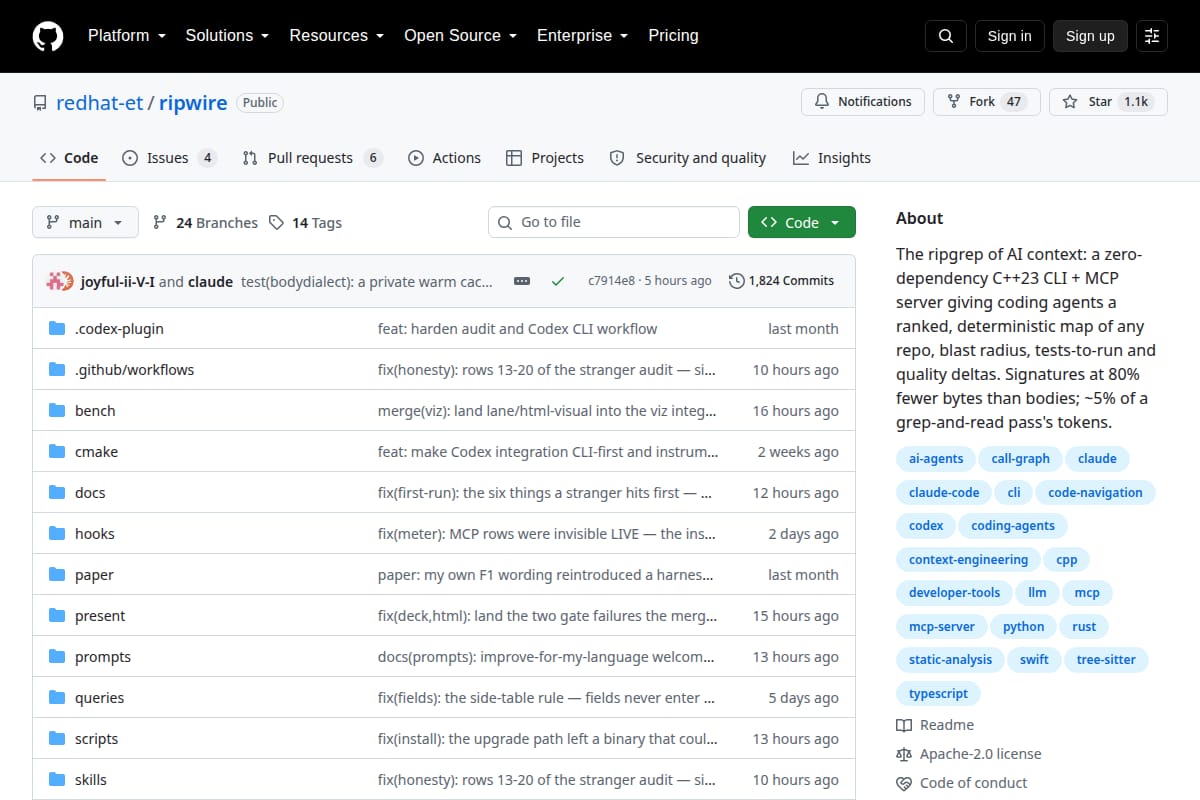
FERNme is an open-source memory engine for AI agents that uses fuzzy graphs and Hebbian-style updates to store user preferences with near-zero LLM calls. The repository highlights editable user-owned memory, flat token usage, outcome-based reinforcement, and deployable plumbing via REST and MCP.

Clear24/30
Useful26/30
Specific17/20
Complete15/20
FERNme screenshot

Why it was accepted

The page clearly describes an AI-native developer tool with a concrete purpose: agent memory. The README gives substantial evidence of how it works, what it optimizes for, and the kinds of systems it targets, making it useful for a public directory listing.
Weakness

The crawl shows strong positioning and feature claims, but it does not show installation steps, API usage examples, benchmark details, or enough hands-on documentation to judge maturity from the page alone.

Review status

just now #436 ↓ -2

Last evaluated just now. Current rank #436. Down 2 spots in the rankings.

Score history

82

Related listings

CodeGraph screenshot
94

Developer Tools / AI for Code

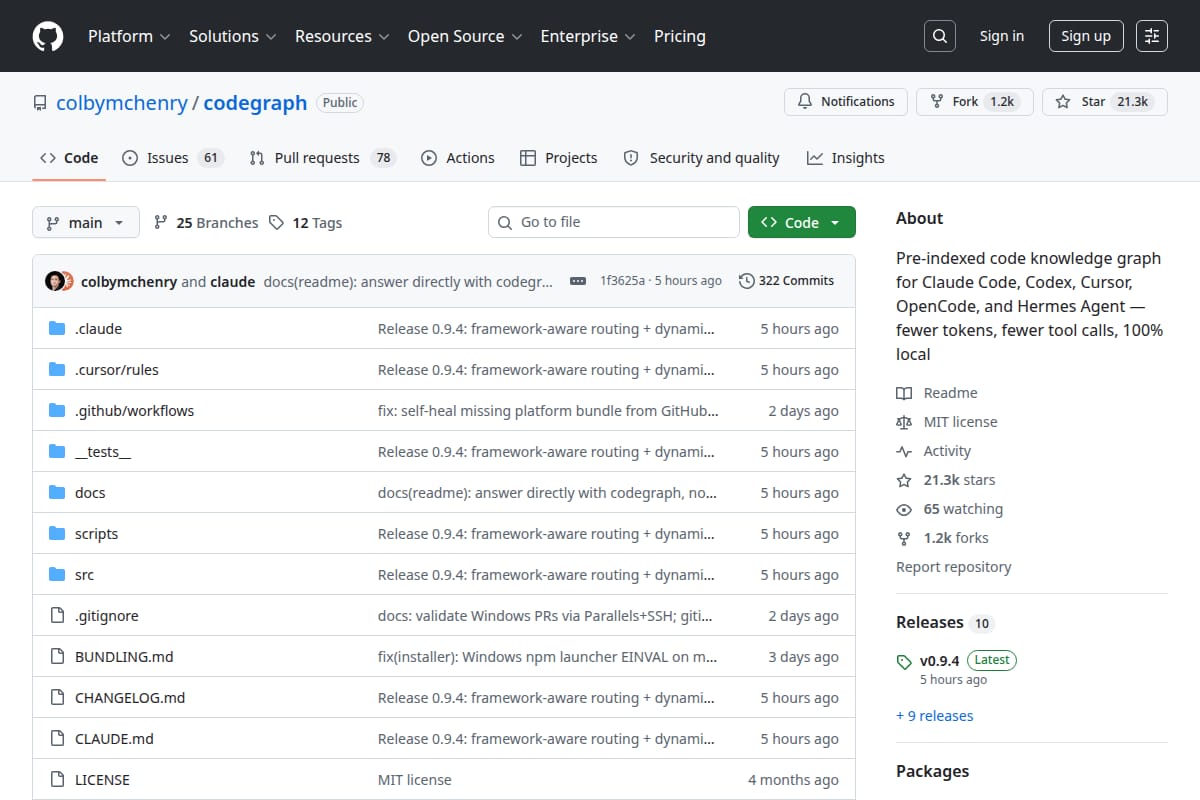
CodeGraph is a local code knowledge graph for AI coding agents like Claude Code, Cursor, Codex, OpenCode, and Hermes Agent. It aims to cut token use, tool calls, and runtime by letting agents query pre-indexed code structure instead of scanning files repeatedly.

LLMRender screenshot
92

Developer Tools / React Libraries

A lightweight React Markdown renderer with built-in LaTeX, syntax highlighting, streaming-safe rendering, and security-focused defaults.

Version Sentinel screenshot

Developer Tools / AI Coding Guardrails

Claude Code plugin that blocks dependency edits until a fresh, source-cited version check is recorded, helping prevent hallucinated or stale package versions across npm, pip, Poetry/uv, Cargo, and NuGet.

Omni screenshot
#7 Omni
91

Developer Tools / Search & Retrieval

Omni is a local-first semantic search app for macOS that indexes text, code, PDFs, images, audio, and video on-device. It supports multilingual search, private offline use, and exposes a local endpoint for agents to query indexed files.